
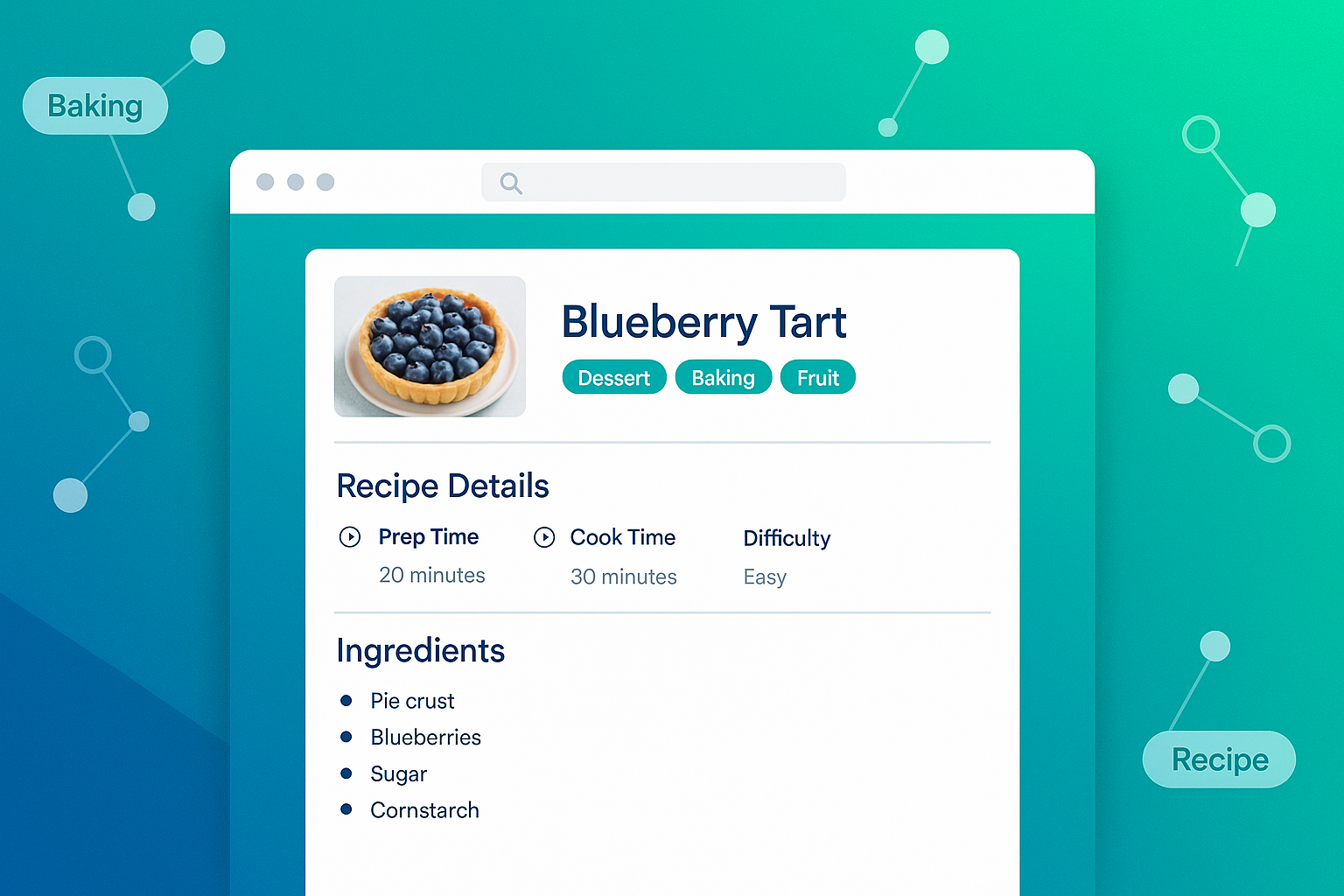
Recipe schema is often mentioned as a technical SEO detail, but it’s much more than that. It’s what allows recipes to appear as rich results, voice-guided steps, and shoppable ingredients across platforms. This article explains what recipe schema is, how it powers discoverability, and why structured data is now essential for food creators and food tech teams.
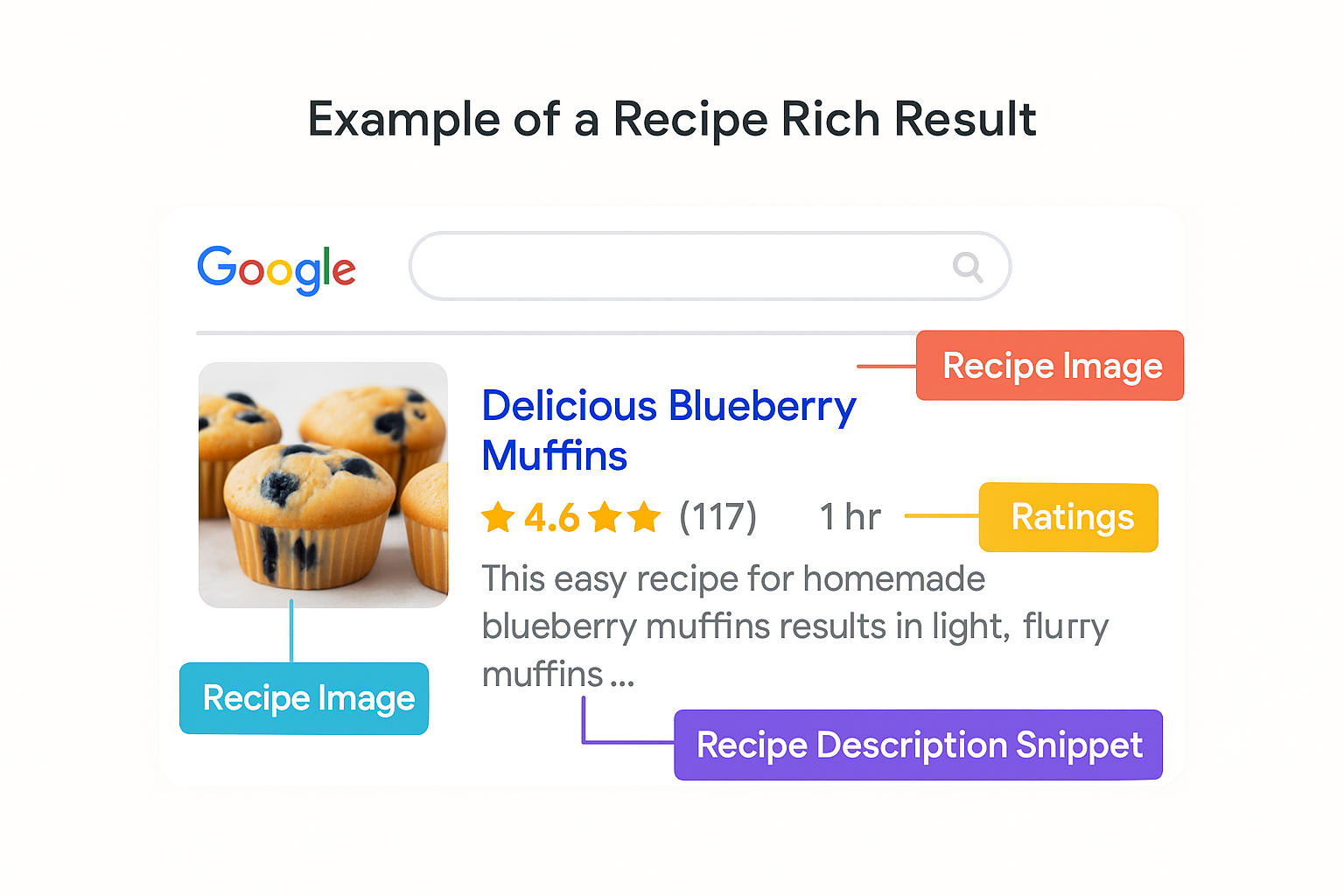
The origins of recipe schema
Schema.org launched in 2011 as a collaboration between Google, Bing, Yahoo, and Yandex to create a shared vocabulary for structured data. Recipes were one of the first supported content types because they’re predictable, high-volume, and search-driven. Over time, the Recipe type expanded to include nutrition facts, cuisine, cooking methods, and even video and voice content. This evolution is what powers recipe schema SEO today.
When food bloggers, brands, or recipe platforms use proper schema markup, they give search engines structured signals about what each recipe includes — from prep time to ingredients and dietary tags. This makes recipes not just readable, but interpretable across Google, Pinterest, TikTok, and even AI-powered assistants.
How recipe schema drives visibility today
Modern recipe discovery happens everywhere — not just on blogs. Search engines, social platforms, and shopping integrations all rely on structured data for recipes. Here’s how schema impacts discoverability and monetization across platforms:
- Google Search & Discover: Recipe schema helps enable rich snippets and recipe carousels, improving click-through rates and visibility.
- Pinterest: Recipe Pins pull from schema to show cooking time, ingredients, and ratings.
- TikTok & Instacart: Shoppable recipes depend on structured ingredient data that maps to grocery products.
- Voice Assistants: Alexa and Google Assistant use
HowToStepschema to guide users through recipes hands-free.
Without recipe structured data, your content might appear in plain search results — but it won’t qualify for enhanced visual formats that drive traffic and engagement.
What goes into recipe schema markup
Recipe schema uses a structured vocabulary to describe each component of a recipe, helping search engines and platforms display consistent, rich information. Below is an example of a recipe markup that powers these rich results:
{
  "@context": "https://schema.org/",
  "@type": "Recipe",
  "name": "Caribbean Curry Chicken",
  "image": ["https://example.com/photos/curry.jpg"],
  "author": { "@type": "Person", "name": "Chris De La Rosa" },
  "datePublished": "2025-04-14",
  "description": "A fragrant Caribbean curry chicken made with traditional spices.",
  "prepTime": "PT20M",
  "cookTime": "PT45M",
  "totalTime": "PT1H5M",
  "recipeYield": "6 servings",
  "recipeCategory": "Dinner",
  "recipeCuisine": "Caribbean",
  "keywords": "Caribbean chicken curry recipe, spicy curry dinner, authentic Caribbean food",
  "nutrition": { "@type": "NutritionInformation", "calories": "350 calories" },
  "recipeIngredient": [
    "2 lbs chicken",
    "2 tbsp curry powder",
    "1 onion, diced",
    "3 cloves garlic, minced",
    "1 cup coconut milk",
    "Salt and pepper to taste"
  ],
  "recipeInstructions": [
    { "@type": "HowToStep", "text": "Season chicken with curry powder and salt." },
    { "@type": "HowToStep", "text": "Sauté onion and garlic until fragrant." },
    { "@type": "HowToStep", "text": "Add chicken and brown evenly." },
    { "@type": "HowToStep", "text": "Pour in coconut milk and simmer for 45 minutes." }
  ]
}Common recipe schema SEO issues
Even experienced food bloggers and developers make small errors that affect visibility. Common issues include:
- Missing or inconsistent
recipeIngredientformats (e.g., “1 can beans” vs “15 oz black beans”). - Improper
prepTimeorcookTimeformats (not using ISO 8601). - Incomplete or outdated metadata fields, especially for nutrition and ratings.
- Plugins outputting valid schema but missing essential context like
recipeCuisineoraggregateRating.
These small gaps can limit your eligibility for Google’s rich snippets, Discover cards, or shopping integrations — ultimately reducing organic visibility.
Schema vs structured content: why both matter
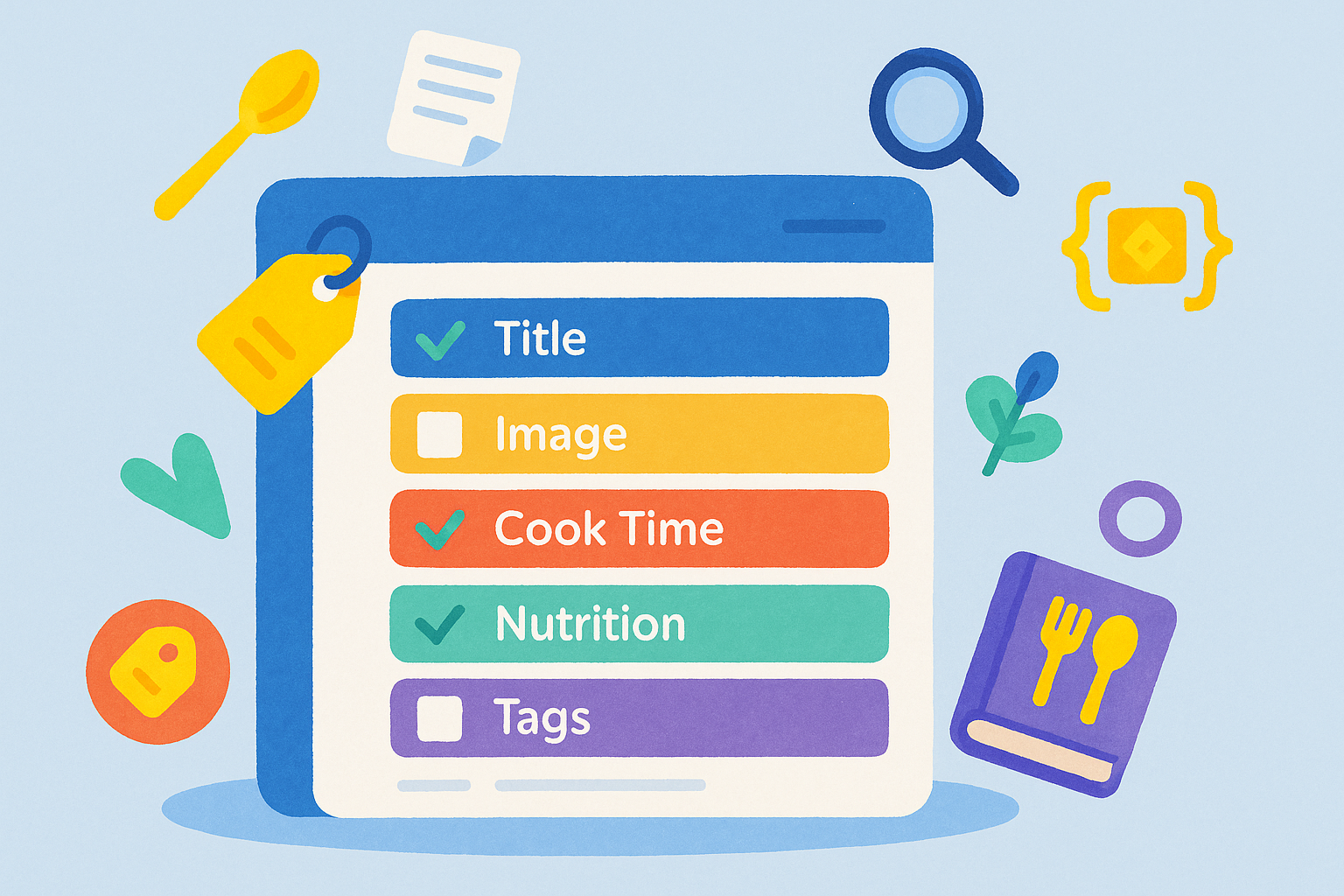
Schema markup describes content, but structured content organizes it. For true scalability and multi-platform reach, food brands and bloggers need a content model that defines every part of a recipe: title, yield, cook time, tags, media, and monetization metadata. Schema then maps that structured content to search-friendly markup automatically.
Schema is the layer that search engines see. Structured content is what makes your recipes future-ready for platforms that haven’t launched yet.
Validating and maintaining recipe schema
Before publishing, test your recipes in Google’s Rich Results Test or Schema.org’s validator. These tools check for missing fields, invalid formats, or nesting errors. Re-test periodically — schema standards evolve, and plugin updates can change output.
Best practices for recipe schema and structured content
- Fill in all recommended fields, not just required ones.
- Use ISO 8601 format for times (e.g., “PT45M”).
- Maintain consistent ingredient phrasing.
- Break instructions into
HowToStepblocks for voice devices. - Tag recipes with cuisines, dietary types, and categories.
- Validate regularly as schema standards evolve.
Read more from Blueberri
- Why Recipe Plugins Aren’t Enough
- Metadata 101: Essential Recipe Data You’re Probably Overlooking
- Content Engineering in Food
For a deeper dive into recipe schema SEO and structured content workflows, subscribe to Blueberri Pi — where food meets technology, one schema at a time.
