

The COSE Framework
Create Once, Share Everywhere for food content.
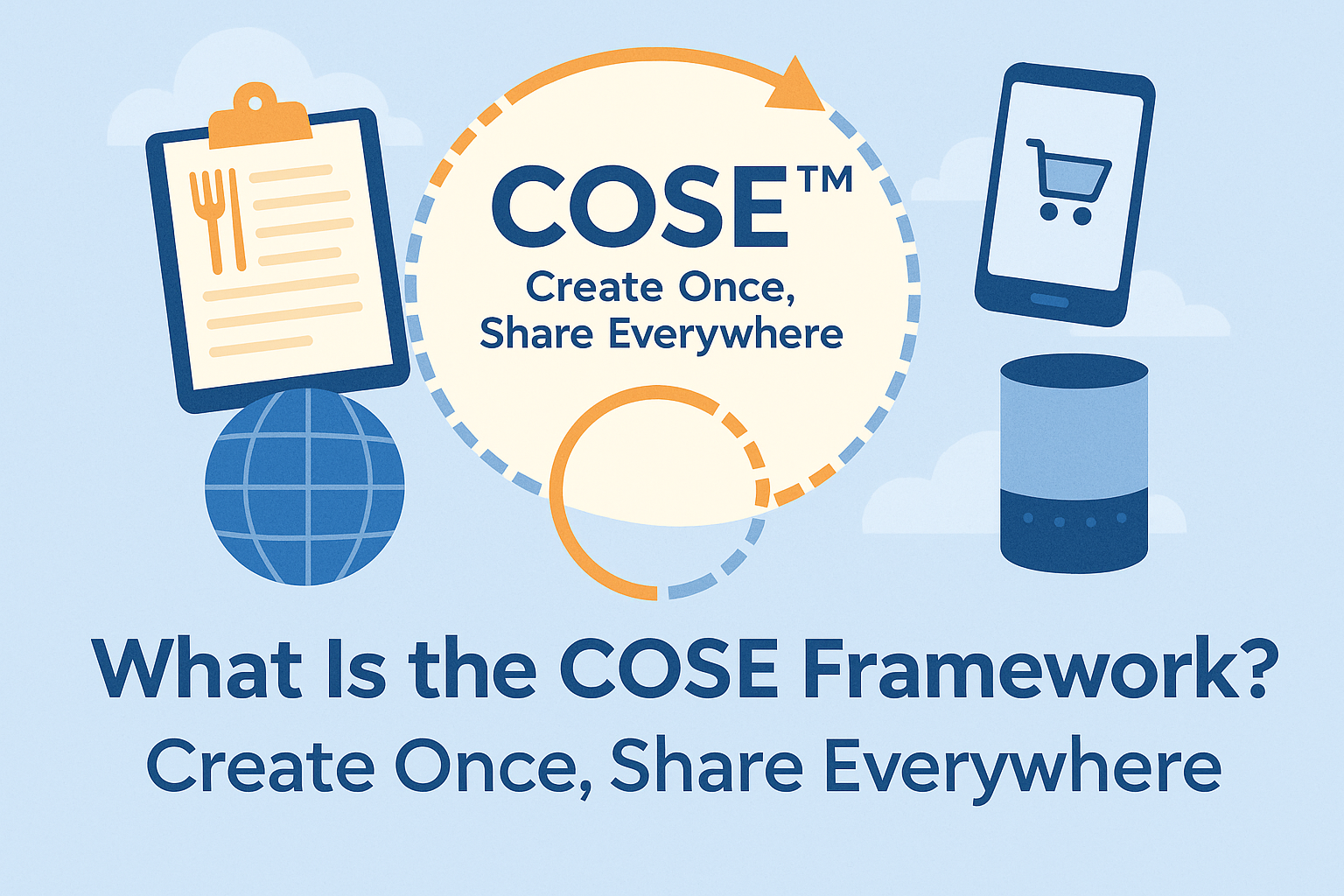
COSE™ is Blueberri’s structured content model for food creators and food tech teams — designed to make recipes, videos, and articles more discoverable, reusable, and future-ready.
Why COSE™ exists
For years, food creators and content teams have been told to publish more and post everywhere. That approach worked when search and social platforms were simpler. Today, recipes and food content need more than volume and timing – they need structure.
The COSE™ Framework was created to answer a practical question: how do we treat food content like an asset, not just a stream of posts? COSE™ gives teams a shared language and a repeatable model for making content findable, reusable, and extensible across websites, apps, platforms, and emerging assistants.
COSE™ is used inside Blueberri’s consulting work with food tech companies, recipe platforms, and advanced food bloggers to align content strategy, operations, and technology around the same goal: structured visibility.
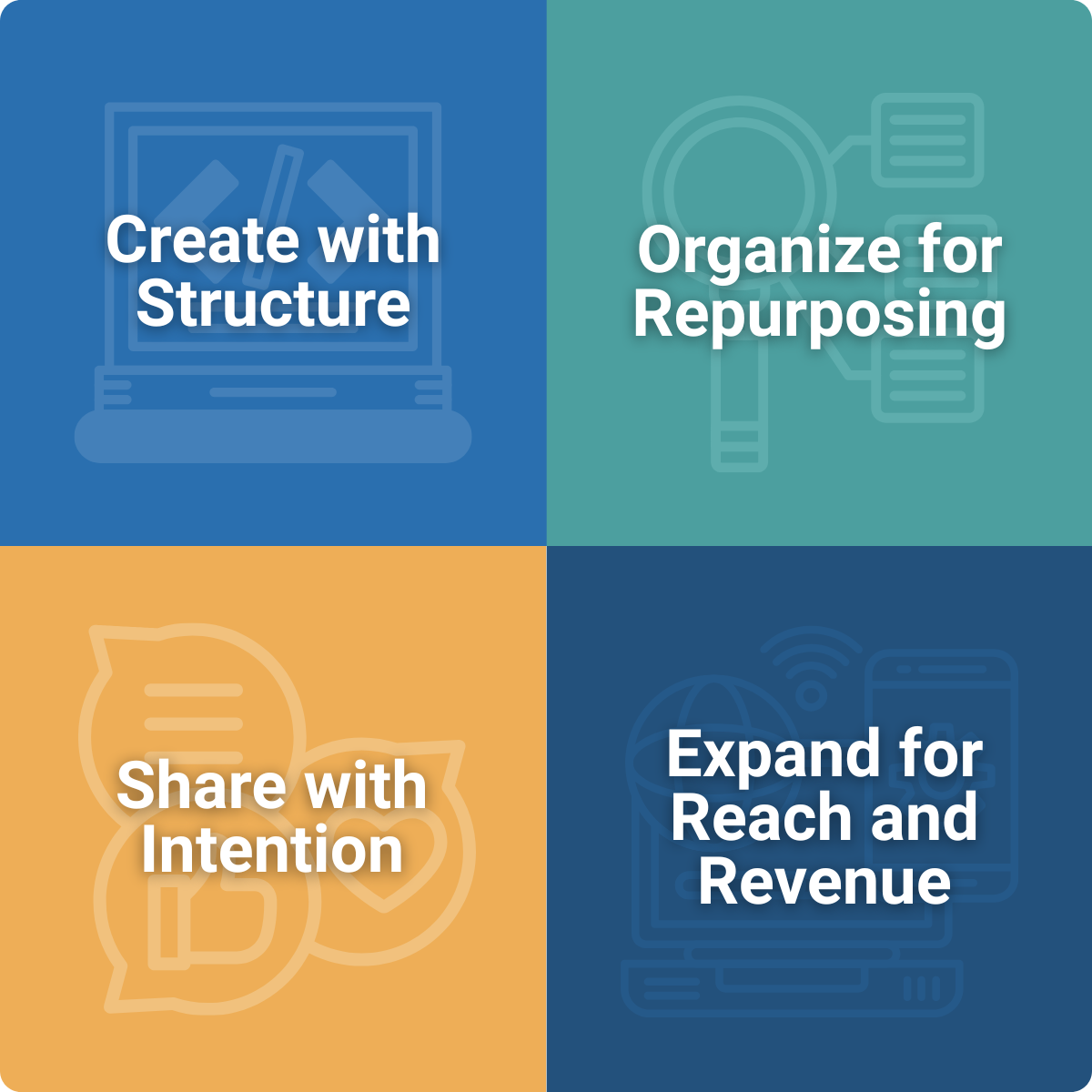
The four pillars of COSE
Create with Structure
Start with content that is consistently structured from day one—ingredients, steps, tips, media, and metadata captured in a way both humans and systems can use. This is where recipe style guides, content models, and minimum viable structure live.
Organize for Repurposing
Once content is structured, it needs to be organized so it can be reused. COSE focuses on taxonomies, tagging, content inventories, and systems that let teams find, filter, and combine assets for new channels and opportunities without starting from scratch.
Share with Intention
Sharing is not about pushing the same post everywhere. COSE helps teams design templates, formatting systems, and workflows that respect how each channel works—search, social, email, apps, and partner platforms.
Expand for Reach and Revenue
With structure in place, COSE™ supports expansion into licensing, partnerships, shoppability, syndication, and new AI-powered discovery. The goal: extend the reach and lifetime value of every piece of content.
How teams use the COSE™ Framework
For food creators and bloggers
Creators use COSE to map their existing recipes, identify gaps in structure and metadata, and design a realistic system for repurposing content across their blog, YouTube, email list, and partner platforms. It becomes a practical filter for deciding what to publish next and how to future-proof what already exists.
For food tech companies and platforms
Product, content, and engineering teams use COSE to align on content models, recipe schema, taxonomies, and workflows. It supports GEO (generative engine optimization), improves how content appears in search and assistants, and reduces friction between teams responsible for content, strategy, and implementation.
Learn more about the COSE™ Framework
If you want an even deeper look at the philosophy, history, and practical application of COSE, I’ve broken it down in detail in a long-form article on my blog. It walks through why content needs structure today, how COSE emerged from real work with food creators and platforms, and what it looks like when a team or creator starts applying it.
The post also includes concrete examples of where creators get stuck, what “structured content” actually means in a food context, and how COSE helps build content that is ready for search, social, and AI-led discovery. It’s a great companion read if you want to understand the framework beyond the high-level overview on this page.
Bring the COSE™ Framework into your work
Blueberri works with food creators, publishers, and food tech teams to apply COSE in real projects – from recipe audits and structured content roadmaps to content operations and partnership strategies.
Not sure where to start? A short strategy session is often enough to identify the first COSE-focused changes that will have the biggest impact on your content.