
If you're creating recipes online, you’re not just a cook or writer—you’re a publisher. And like any publisher, your content is only as useful as its structure. In 2025, with smart assistants reading recipes aloud, AI models surfacing voice-friendly instructions, and grocery apps parsing ingredient lists on the fly, structured content isn’t optional, it’s foundational.
This guide will help you understand what structured content is, why it matters, and how to start implementing it. This is for solo food bloggers or those part of a food tech content team. We'll also show how it connects to recipe schema, metadata, discoverability, and monetization.
What is structured content?
Structured content is content that’s organized in a way machines can understand and reuse. For recipe creators, that means breaking your recipes into clear, labeled parts that platforms can parse, display, and distribute across formats.
A structured recipe includes:
- Title (Recipe name)
- Description (Short summary)
- Ingredients (List format)
- Instructions (Step-by-step with order)
- Cook time/prep time/total time
- Servings and yield
- Nutritional information (optional but helpful)
- Tags and categories (diet, cuisine, occasion)
- Images and alt text
For more on why this matters, see Why structured content matters for food bloggers.
Why structured content matters more in 2025
Today’s content is consumed across more channels than ever. Blogs are just one place recipes live. Others include:
- Google Search and Rich Results
- Pinterest and visual search
- Grocery apps and shoppable integrations
- Smart kitchen devices
- AI models that surface voice-based instructions
- Meal planners and nutrition tools
- Social platforms like TikTok and Threads
Structured content vs. unstructured content
Structured content makes your recipes easier to discover, reuse, and monetize—unlike unstructured content, which limits visibility and scalability across platforms.
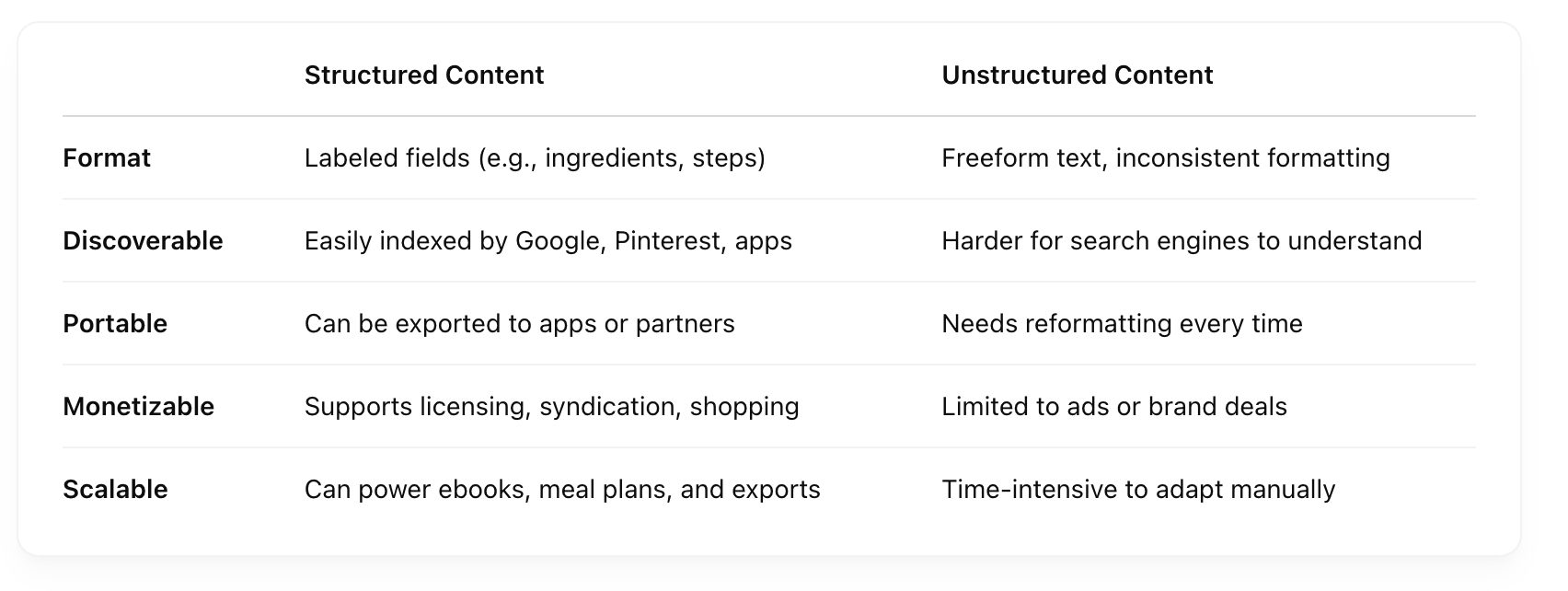
For a deeper breakdown, see Structured content vs. traditional content: What's the difference?.
How it supports visibility: SEO and search
Google and other platforms prioritize structured data in search results. Recipes with schema markup are more likely to show up with:
- Star ratings
- Prep and cook times
- Serving info
- Thumbnails
- Ingredients preview
How it supports monetization
Structured content makes your recipes platform-ready, which opens up monetization models like:
- Syndication and licensing to grocery apps, platforms, and wellness tools
- Shoppable recipes that link to cart-ready ingredients
- Meal plan products that pull from tagged recipe types (e.g., dairy-free, under 30 mins)
- Custom experiences like cook-alongs, voice instructions, or nutrition filters
- AI-driven recommendations based on dietary goals or preferences
To learn how this works in practice, check out How structured content drives recipe discoverability & monetization.
Core components of structured content
- Schema markup: The code that tells search engines what your recipe includes. Even if you use a plugin, understanding schema ensures your markup is clean, complete, and up-to-date. See also Metadata 101.
- Taxonomy: Your system of tags and categories. A strong taxonomy helps organize your content and ensures filtering works across search tools, apps, and internal navigation.
- Metadata and tagging: Labels you apply, like diet, cuisine, prep time, or difficulty level. This helps platforms surface the right content to the right audience.
- Structured storage and backups: Save content in a portable, platform-friendly format (like XML, JSON, or spreadsheets). That makes it easier to restore, license, or republish.
Structured content in action: Real examples
For a food blogger:
- Use one recipe across your blog, newsletter, Pinterest, and ebook
- Update an ingredient in one place and have it reflected everywhere
- Create meal plans filtered by tags (e.g., vegan, 5 ingredients, weeknight)
- Offer licensing packages to partners with minimal reformatting
For a food tech company:
- Ingest recipes from creators or data partners
- Power search, shopping, and voice instructions
- Surface personalized recipe recommendations
- Scale your recipe library without breaking structure
Common myths about structured content
- “Isn’t structured content just for developers?” Nope. It’s for creators, marketers, editors, and anyone managing recipe content across channels. It’s about organizing information, not writing code.
- “Do I need a headless CMS?” Not unless you're at scale. You can use recipe plugins with schema support, spreadsheets with taxonomy, and XML exports to get started.
- “I’ll structure it later, after I publish more.” The longer you wait, the harder it is to clean up. Starting now makes your content future-proof and ready for monetization and syndication.
How to get started with structured content
- Audit your existing content: Is everything labeled consistently? Do you use a plugin that supports schema? Do your tags align with your goals?
- Build a recipe model: Define what fields each recipe should include. Use a spreadsheet or template as your guide.
- Add or clean up schema: Use the Google Rich Results Test to see what’s missing.
- Save structured backups: Export content regularly in XML or spreadsheet format for portability and licensing.
- Link structure to strategy: Structured content enables reuse: ebooks, bundles, licensing, TikTok-ready formatting, and smart kitchen integrations.
Structure is scale
Whether you're a solo blogger or building the next big recipe app, structured content gives your work legs. It makes your content:
- Easier to find
- Faster to repurpose
- More valuable to partners
- Resilient to platform changes
- Monetizable in new ways
